- What is Fleet Leasing Software?
- How does fleet leasing software work?
- Key Problems Encountered in the Fleet Leasing Process
- What are the benefits/advantages of fleet leasing software for your business?
- What to Consider When Choosing Fleet Leasing Software?
- An Example from One Industry: From Contract Complexity to Automatic Reminders
- Frequently Asked Questions
What is Fleet Leasing Software?
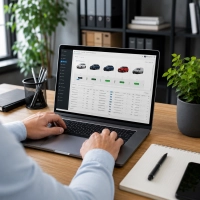
Fleet leasing software is a system that companies engaged in long-term vehicle leasing manage their fleet management, sales, after-sales services, and reporting processes. By automating time-consuming tracking tasks, it enables businesses to manage their vehicle portfolio from a single central location.
-
Maintaining the vehicle inventory in a central system.
-
Digital storage of contracts and automated reminders.
-
Automation of maintenance, inspection, and insurance tracking.
-
Identifying idle/unused capacity.
-
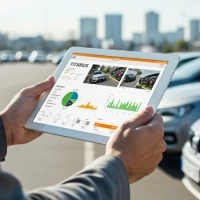
Cost analysis and reporting.
How does fleet leasing software work?
The following five steps represent the typical operational flow of a fleet leasing software.
-
Register the vehicle inventory in the system: Information on all vehicles in the fleet is kept in a central inventory system.
-
Create contract and reservation information digitally: Rental agreements are stored digitally, preventing date/content confusion.
-
Schedule maintenance, inspection, and insurance dates: Dates that are about to expire will be automatically marked as alerts.
-
Identify and repurpose idle/idle vehicles: Unused vehicles are identified and redirected for re-leasing.
-
Monitor cost and performance reports: Fleet-based cost analysis is reviewed regularly.
Key Problems Encountered in the Fleet Leasing Process
-
Confusion of dates and content in contracts: It's impossible to keep track of when each contract expires, whether in paper or scattered digital files.
-
Missed maintenance and inspection dates: With manual tracking, a vehicle can be driven on the road without detecting overdue maintenance/inspection dates.
-
Inefficient vehicle usage: Some vehicles remain idle, a fact not visible to the central office, preventing fleet optimization.
-
Delays in delivery and return processes: Delivery/return deadlines may be missed when the process is tracked manually.
-
Uncontrollable costs: When vehicle-based expense items are not tracked separately, it remains unclear which vehicle is making a profit or loss.

What are the benefits/advantages of fleet leasing software for your business?
-
Operational errors are reduced: Since contract and maintenance dates are not tracked manually, the risk of missed dates due to human error is lowered.
-
Costs become visible: Vehicle-based expense and revenue items are tracked separately, clarifying which vehicles are profitable.
-
Unused capacity is utilized: Idle vehicles can be identified and redirected to re-leasing, increasing fleet efficiency.
-
Accounting and e-invoicing integration: Invoicing and collection processes are managed through the system without needing to be handled manually.
What to Consider When Choosing Fleet Leasing Software?
| Criterion | What to Pay Attention To |
| Ease of use | The interface should be user-friendly, and all processes should be manageable from a single screen. |
| Cloud-based access | Access should be possible from any device with internet access, regardless of location. |
| Maintenance/inspection/insurance automation | Automatic alerts should be sent for upcoming deadlines, instead of requiring manual tracking. |
| Integration scope | It should be able to integrate with accounting, e-invoicing, and website/reservation systems. |
| Multi-user support | Users in different departments/branches should be able to work together on the same system without conflicts. |
| Cost and support structure | It should be clarified whether all required modules require additional licenses and what support/training is provided. |
An Example from One Industry: From Contract Complexity to Automatic Reminders
In a fleet company that leases vehicles long-term to corporate clients, contract expiration dates were tracked in separate files kept by different personnel; some contracts were only noticed weeks after their expiration, and some vehicles missed their inspection dates. After switching to fleet leasing software, each contract and each vehicle's maintenance/inspection date began to generate automatic alerts in a single calendar; the expiration dates of each contract are now visible without manual scanning.
“We no longer check file by file to see if we’ve missed the contract expiration date; the system automatically marks those that are nearing their end,” says the company’s fleet manager.
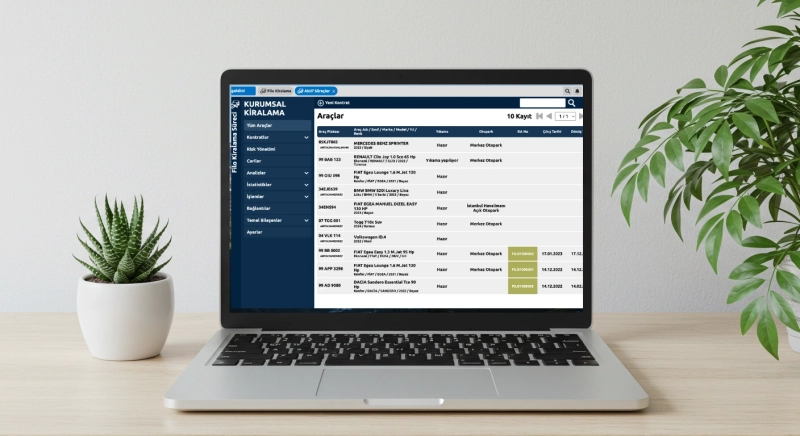
Titarus is a vehicle rental ERP software with over 200 modules that manages reservation, contract, fleet, accounting, and KABIS (Vehicle Information System) notification processes for rent-a-car companies on a single platform. When choosing your fleet rental software, it helps you reduce the risk of missed dates by automatically tracking contract and maintenance/inspection dates.
Frequently Asked Questions
What is fleet leasing software used for?
Fleet leasing software enables companies that lease vehicles long-term to manage their vehicle inventory, contracts, maintenance/insurance tracking, billing, and reporting processes from a single platform.
What problems does fleet leasing software solve?
It solves common operational problems such as date/content confusion in contracts, missed maintenance and inspection dates, inefficient vehicle use, and uncontrollable costs through automation.
What is the most important criterion when choosing fleet leasing software?
There is no single criterion; contract/maintenance tracking automation, cloud-based access, integration capabilities, and reporting depth should be evaluated together.
What is the difference between fleet leasing software and rent-a-car software?
Rent-a-car software focuses on short-term daily/weekly vehicle rental operations, while fleet leasing software focuses on long-term corporate leasing contracts, maintenance tracking, and fleet optimization.
Should fleet leasing software be cloud-based?
A cloud-based system is advantageous for location-independent management because it allows access to fleet data from any device with internet access.
Want to automate contract and maintenance tracking for your fleet? Try Titarus for free for 15 days without needing to provide credit card information.
Related pages: System Features: Vehicle Management · Rent-A-Car Software: Modules and Selection