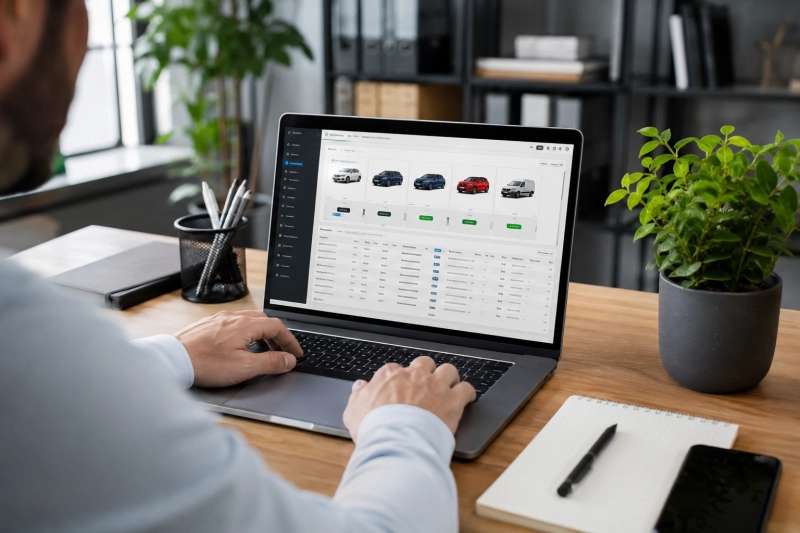
- Why is choosing a rental car software so critical?
- Essential Criteria to Look for in Rent-A-Car Software
- Off-the-shelf software or custom software? Cloud or on-site installation?
- Pricing Models: Licensing or Subscription?
- Integration Capacity: Which Systems Should It Be Compatible With?
- Why Shouldn't the Personal Data Protection Law (KVKK) and Data Security Be Overlooked?
- Questions to Ask When Choosing Rent-A-Car Software
- Choosing the Right Software with Titarus
- Conclusion: The Right Decision, Long-Term Competitive Advantage
The market is flooded with car rental software options, each claiming to be the most comprehensive, affordable, or easy-to-use. But the wrong choice means not only wasted budget, but also time-consuming data transfers, staff training, and operational disruptions. This guide covers the truly important criteria, pricing approaches, and crucial questions to consider when comparing car rental programs.
Why is choosing a rental car software so critical?
Car rental software isn't just a tool for taking reservations; it's the backbone of your entire operation, from fleet management and accounting to customer relations and your website. A poorly chosen system will lead to scalability, requiring repeated software changes over time, resulting in increased data migration and training costs. Therefore, choosing the right rent-a-car software isn't just an IT decision, but a strategic one that directly impacts profitability.
Essential Criteria to Look for in Rent-A-Car Software
Key criteria to consider when comparing a rent-a-car program include: module variety, mobile compatibility, system integration, quality of customer support, pricing structure, ease of use, detailed reporting, and scalability.
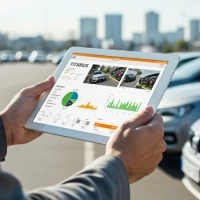
Module variety determines whether booking, fleet management, accounting, and customer relations are offered on a single platform or separately. Mobile compatibility indicates whether your field team can handle vehicle delivery and return processes via phone. System integration is the ability to connect with accounting, e-invoicing, payment, and booking channels. Customer support quality refers to the availability of an accessible support team during setup, training, and afterward. Pricing structure requires questioning whether there are hidden module or user fees in the licensing or subscription model. Ease of use means that personnel can quickly adapt to the system without advanced technical knowledge. Detailed reporting allows monitoring of vehicle-based profitability, occupancy rate, and campaign performance. Scalability is the ease of adding new branches, users, and vehicles as your fleet grows.
Evaluating these criteria separately for each software program you examine makes the decision-making process data-driven, not emotional.
Off-the-shelf software or custom software? Cloud or on-site installation?
Ready-made solutions offer quick setup and low initial costs, but customization may be limited; custom software, on the other hand, can be adapted to all processes but has higher development time and cost. For most small and medium-sized car rental businesses, the ideal balance is a ready-made ERP-based car rental software with flexible modules.
Cloud-based software requires no installation, is accessible from anywhere, and eliminates server maintenance concerns; on-premises installation provides greater data control but incurs IT infrastructure and maintenance costs. The general trend in the industry, especially for growth-oriented businesses, is shifting towards cloud-based solutions.
Pricing Models: Licensing or Subscription?
There are two main pricing approaches in the market: a one-time license fee or a monthly or annual subscription model. While the license model may seem more expensive initially, it can be advantageous in the long run; the subscription model offers a lower initial cost and the advantage of continuous updates. When making your decision, you should consider not only the basic fee but also additional module fees, per-user pricing, and support and update costs.
Integration Capacity: Which Systems Should It Be Compatible With?
Today, it's not enough for a rent-a-car software to operate in isolation. You should definitely inquire about the following integration areas: accounting and e-invoicing systems, virtual POS and online payment infrastructure, HGS and OGS toll and penalty tracking systems, B2B connectivity with booking brokers and online travel agencies, GPS-based vehicle tracking systems, CRM and call center software.
Titarus's Integrations module allows you to manage most of these connections from a single panel; you don't need to allocate budget to separate integration projects.
Why Shouldn't the Personal Data Protection Law (KVKK) and Data Security Be Overlooked?
Car rental businesses process sensitive customer data such as identity, payment, and rental history. Be sure to check whether the software you choose complies with GDPR (Turkish Personal Data Protection Law) by offering data storage, encryption, and user-based authorization; this is not only a legal requirement but also a part of building brand trust.
Questions to Ask When Choosing Rent-A-Car Software
Is the system entirely cloud-based, or does it require server setup? Does the system scale without additional cost as the number of branches and users increases? Is accounting and e-invoicing integration included in the standard package, or is it an extra charge? Can vehicle delivery and return transactions be done via the mobile application? Is integration with booking brokers and online travel agencies available? Through which channels can the support team be reached? Is a free trial or demo offered? How is data backup and GDPR compliance ensured? Are there any hidden costs in the pricing model? Do you have reference clients of similar size to yours?
Choosing the Right Software with Titarus
Titarus combines all of the above criteria under a single ERP-based rent-a-car software umbrella: fleet and inventory management, contract and reservation management, online booking and payment, accounting, customer relations, human resources, and integrations are all managed from a single panel. Thanks to its cloud-based infrastructure, you don't have to worry about installation, your field team can perform operations from anywhere with its mobile-friendly interface, and you can optimize your profitability with the Campaign and Price Management module.
The quickest way to clarify any points you're unsure about is to actually use the software. That's why you can try Titarus for free without being asked for credit card information, and answer the questions above by testing them with your own business data.
Conclusion: The Right Decision, Long-Term Competitive Advantage
Choosing car rental software isn't a one-time purchase; it's an infrastructure decision that determines your business's future growth potential. By clearly comparing module variety, integration capabilities, pricing transparency, and scalability, you can make the right decision to meet both today's operational needs and tomorrow's growth goals.